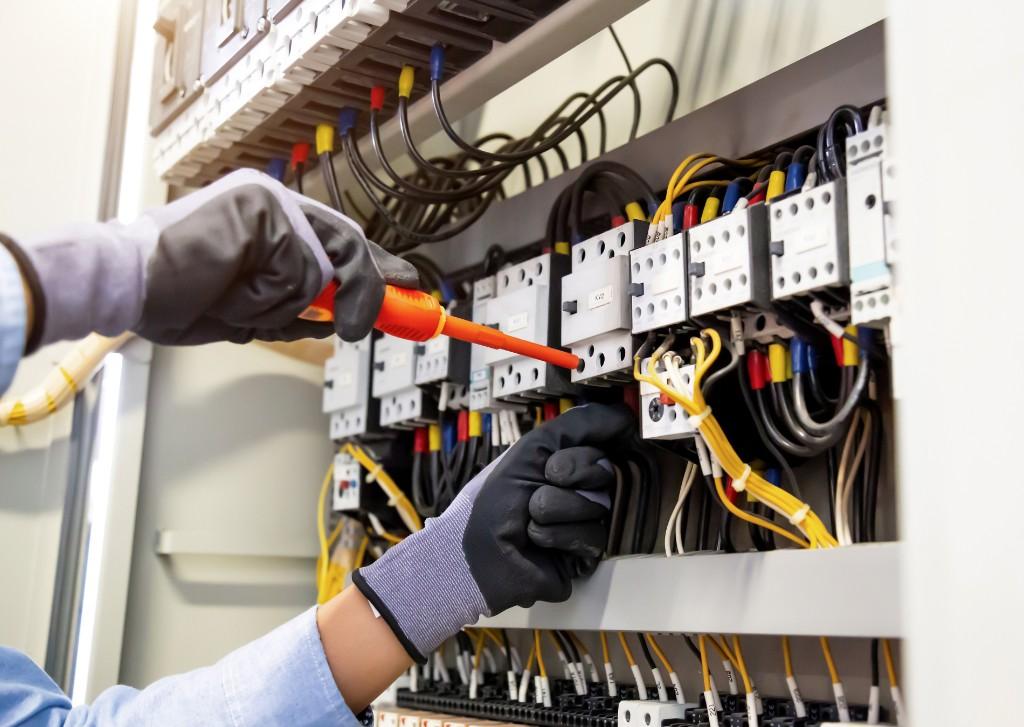

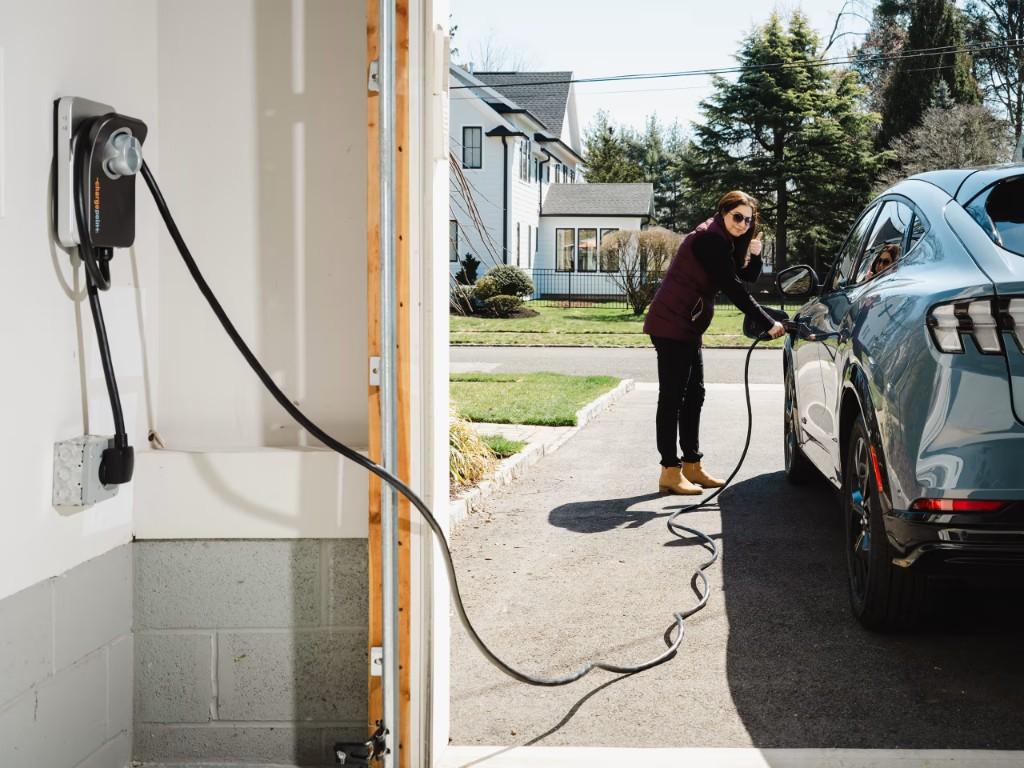
Thinking about charging your electric vehicle at home? The first thing most Ottawa drivers want to know is what it will cost and who is allowed to do the work. This guide answers both, with realistic 2026 price ranges for Ottawa homes and a plain explanation of Ontario's rules for EV charger installation in Ottawa.
How much does it cost to get an EV charger installed?
HomeStars' 2026 electrician cost guide puts a Level 2 home charger installation at $800 to $2,000. That figure is the installation of a 240-volt charger, usually 30 to 50 amps. It depends on how far the circuit has to run from the panel and whether the panel has room for the load. The guide does not price the charger unit itself.
Where you land in that range depends mostly on your home:
- A short run. Your electrical panel is in or near the garage, it has spare capacity, and the wire run is short.
- A longer run. The panel is in the basement or on the far side of the house, so the wire has to travel farther and pass through finished walls or an exterior wall.
- A panel that cannot take the load. The panel or service has to be upgraded before the charger goes in. That upgrade is a separate project, priced below.
These figures are market averages from the sources listed, not VB Electric's prices, and every job is quoted on its own. The only way to get a firm number is a site visit and a load calculation on your panel. For other electrical jobs, see what an electrician costs in Ottawa.
How much does it cost to install a new EV charger?
If your home has never had a charger, you are paying for more than the unit on the wall. A new Level 2 EV charger installation is made up of a few separate costs:
| Item | Typical cost in Ottawa* | What it covers |
|---|---|---|
| Level 2 installation | $800 to $2,000 | How far the 240-volt circuit runs from the panel, and whether the panel has capacity. HomeStars' 2026 guide. This is the installation, not the charger unit. |
| Charger unit | App control and load management | No source states a price for the unit alone. Those features are what move it. |
| ESA notification | $92 minimum, then itemized | The Electrical Safety Authority's 2026 fee guide sets a $92 minimum for a notification for any wiring installation. A calculated fee under $92 is raised to that minimum. The rest of the fee is itemized by the type of work. The 2026 Wiring Fee Guide is linked in Sources. |
| Panel or service upgrade (only if needed) | $1,500 to $6,000 or more | HomeStars' 2026 guide puts a 200-amp panel upgrade at $1,500 to $4,500, and says more involved panel work can run well over $5,000. RenoQuotes' 2026 guide puts an upgrade to a 200-amp service at $2,500 to $6,000 or more. The span is $1,500 to $6,000 or more. |
*Price ranges are estimates only. Your final price depends on the job and its scope. Figures are market averages from the sources listed, not VB Electric's prices, and every job is quoted on its own.
If you already own a charger, or it came with your vehicle, you only pay for the installation and permit. If you are replacing an old charger and the existing circuit is the right size and in good condition, the job is usually quicker and cheaper than a first-time installation.
What changes the price of an EV charger installation?
Two houses on the same street can get very different quotes. These are the things that move the price:
- Distance from the panel to the charger. This is the biggest factor. A longer wire run means more copper, more conduit, and more labour.
- Panel capacity. Many older Ottawa homes have 100-amp service. Add a charger to a home that already has electric heat, a hot tub, or a heat pump and there may not be room. A load calculation tells you for certain.
- Load management instead of an upgrade. In many cases a smart charger or load management device can share power with the rest of the house and avoid a full electrical panel upgrade. It is worth asking about before you agree to a bigger job.
- Indoor or outdoor mounting. Outdoor chargers need weatherproof equipment and wiring methods built for Ottawa winters. A driveway pedestal with trenching costs more than a garage wall mount.
- Hardwired or plug-in. A hardwired charger is connected directly to the circuit. A plug-in charger uses a 240V receptacle. Each has its place, and the right choice depends on the charger and where it is going.
- Finished spaces. Fishing wire through a finished basement takes longer than running it across an open ceiling.
Can a normal electrician install an EV charger?
Yes, as long as that electrician works for a Licensed Electrical Contractor. In Ontario, anyone you hire to do electrical work in your home must, by law, be a Licensed Electrical Contractor holding an ECRA/ESA licence. A handyman, a general contractor, or someone working for cash on the side cannot legally install your charger.
Every EV charger installation in Ontario also needs an electrical permit, called a notification of work, filed with the Electrical Safety Authority before the work starts. Your contractor files it. Once the work passes inspection, the ESA issues a Certificate of Acceptance. Keep that document. Your insurance company or a future buyer may ask for it.
So a "normal" licensed electrician is allowed to do the job. What matters is whether they do it properly. Before you hire anyone, ask:
- Will you file the ESA permit, and will I get the Certificate of Acceptance?
- Will you do a load calculation on my panel before quoting?
- Is the charger you are installing certified for use in Canada?
- If my panel is tight, can load management avoid an upgrade?
VB Electric is a licensed and insured electrical contractor based in Orleans, and owner Vincent Bourdeau is a certified Master Electrician. Every charger we install is permitted and inspected.
What about EV chargers for businesses and multi-unit buildings?
Chargers for workplaces, retail parking, fleets, condos, and apartment buildings are a different kind of project. Pricing depends on how many chargers you need, how far they are from your electrical room, whether the building's service can carry the load, and whether you need billing, access control, or power sharing between stalls.
Because every site is different, commercial EV charger installation is quoted after a site assessment. If you are planning chargers as part of a larger build or renovation, it helps to bring in a commercial electrician in Ottawa early, so conduit and capacity are planned before the walls and pavement are finished.
How an installation with VB Electric works
- Request a quote. Tell us your vehicle, where you park, and where your panel is. Photos of the panel help.
- Assessment and load calculation. We check your panel, your service size, and the route for the new electrical wiring.
- Written quote. You get a clear price that includes the permit. If panel upgrades or load management are needed, we explain why and what the options are.
- Permit and installation. We file the ESA notification of work and install the charger. Most home installations are finished in a single visit.
- Inspection and handover. The work is inspected, we show you how the charger works, and you receive your Certificate of Acceptance.
Frequently asked questions
Do I need a permit to install an EV charger in Ottawa?
Yes. Every EV charger installation in Ontario requires an ESA electrical permit, filed before work starts. It is separate from a building permit, and your Licensed Electrical Contractor files it for you.
Can I install an EV charger myself?
It is not a good idea. A Level 2 charger is a high-load, 240-volt circuit that runs for hours at a time, and mistakes can cause a fire or damage your vehicle. The work still needs an ESA permit and inspection either way. Hiring a Licensed Electrical Contractor is the safe route.
Do I need a 200-amp panel for an EV charger?
Not always. Many homes with 100-amp service can still add a charger, sometimes with a lower charging rate or a load management device. A load calculation is the only way to know.
Is a Level 1 charger enough?
Natural Resources Canada's charging table lists Level 1 as a 120-volt outlet and Level 2 as 208 or 240 volts. Level 1 adds 3 km to 8 km of range per hour of charging. Level 2 adds 16 km to 50 km. Those ranges are estimates and assume charging stops at 80 percent. Most drivers choose Level 2 so the car is full every morning.
What areas does VB Electric serve?
We install EV chargers across Orleans, Ottawa, Kanata, Barrhaven, Nepean, Rockland, and Cumberland. See our full service area.
Get a quote for your EV charger installation
Every home and building is wired differently, so the best next step is a quote based on your panel and your parking spot. Fill out the form below to request a quote and we will get back to you with a clear, permit-included price.